Tin Bridge
Needful ThingsTin Bridge, also known as Castle Stream Bridge, is Castle Rock’s old crossing over Castle Stream and a practical link between the town and its surrounding roads. Its repeated appearances make it both a point of orientation and a threshold: characters travel over it while the novel’s separate conflicts gather, until Ace Merrill and Danforth Keeton rig explosives beneath the structure and bring it down. The blast turns a familiar passage into a decisive break in the town’s already collapsing order.
Setting and Place in Castle Rock
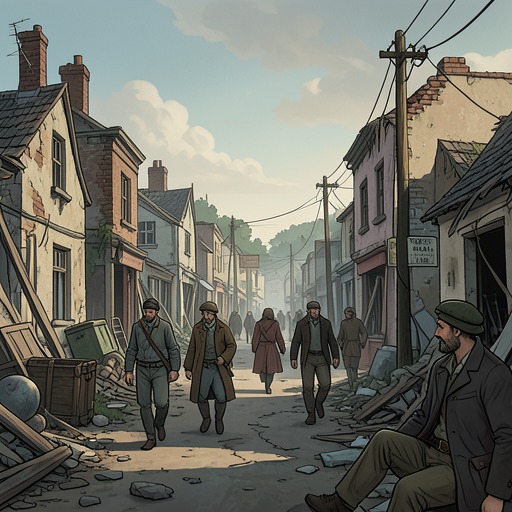
Tin Bridge spans Castle Stream near the point where Route 117 approaches town. The adjacent Castle Building, a brick structure dating to 1924, stands across the street from the Municipal Building and casts its shadow over both the stream and the bridge. The bridge is old, rusty iron, despite the name by which Castle Rock residents have known it for generations. Its position makes it a natural landmark in the town’s geography: a crossing into Castle Rock, a route out toward nearby farms and roads, and a recognizable feature of the stream valley.
The bridge’s name and material do not quite match. The old structure is iron, not tin; the familiar name belongs to local usage rather than literal description. That modest discrepancy suits the bridge’s role in the narrative: it is an ordinary, well-known part of the town’s landscape, yet its significance becomes larger than its everyday function as the events of the last day converge there.
Routes, Encounters, and Orientation
The bridge repeatedly helps establish where characters are and where they are going. Ace Merrill studies Pop Merrill’s treasure map and identifies its paired lines and central mark as Tin Bridge, with Route 117 running through it. Once he recognizes the landmark, the rest of the map becomes legible to him, linking the crossing to the nearby Gavineaux dairy farm and the route toward his first planned excavation. The bridge thus acts as a key to reading both the local landscape and the map that draws Ace toward his uncle’s buried property.
It is also a point where journeys and separate strands of the town’s life pass close to one another. After traveling back across the bridge, Ace heads toward the old Treblehorn place; on the way, he passes a convertible carrying Lester Ivanhoe Pratt and other young men returning from a religious meeting. Later, Lester crosses the bridge and is let out at the corner of Main and Watermill. These crossings establish the structure not as a secluded landmark but as part of the routine circulation connecting Castle Rock to its surrounding roads and communities.
The bridge’s position also shapes the approach of larger events. A bright reflection from an approaching car near the crossing announces a consequential arrival in Castle Rock, though Alan Pangborn, working in his office on the Cobb-Jerzyck murders, does not see it. The scene gives the bridge a quiet anticipatory function: traffic arrives from beyond town, while the characters within Castle Rock remain absorbed in conflicts already underway.
The Explosives Beneath the Bridge
During the town’s breakdown, Ace and Danforth Keeton use a town explosives supply to attack the crossing. At the bridge, Ace slides down the wet bank carrying a blanket-wrapped parcel of dynamite. He places it beneath the structure, in the angle formed by two support struts, connects the blasting cap, and sets the timer to forty minutes. The charge and caps have been waterproofed, so the rain does not prevent the plan. After the two men leave, the timer continues counting down beneath the bridge.
The placement turns the familiar route into concealed infrastructure for the attack on Castle Rock. Ace and Keeton drive away about seven minutes before Alan Pangborn crosses the bridge, while the timer still has thirty minutes to run. Their movement through the town continues as they leave small explosive packages at other locations. The bridge is therefore both one target among several and a central piece of the campaign: it is where the operation’s first timed charge is set, on a route that Alan himself uses to return to town.
The timing gives the bridge’s destruction a sharp dramatic turn. The structure that had helped travelers orient themselves and move between places becomes an obstacle and a visible sign that the violence has reached the town’s physical connections. The crossing is not merely damaged in passing; the attack is deliberately timed and executed as part of the wider bombing campaign.
Destruction and Narrative Significance
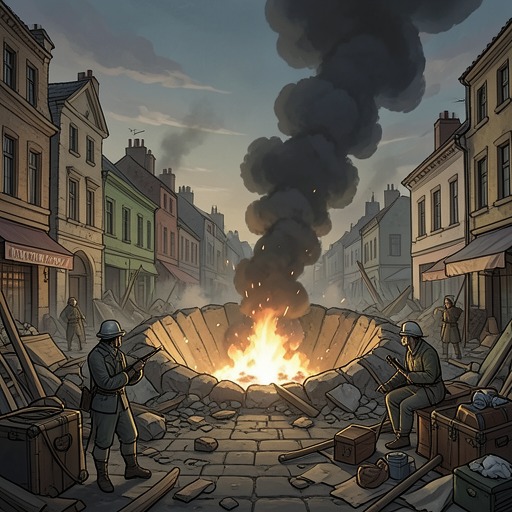
The timer reaches zero at 7:38 p.m. on Tuesday, October 15, 1991. The electrical trigger sets off the blasting cap and dynamite. The south end of the iron bridge lifts from the bank, rises, and drops back amid broken cement and flying metal; the north end twists loose, and the structure falls askew into Castle Stream. The south end comes to rest on an elm that lightning had already brought down. The storm and the bombing thus meet at the crossing, leaving the bridge’s wreckage tied to both natural destruction and deliberate violence.
The blast is heard during the ongoing confrontation on Castle Avenue between Catholics, Baptists, and State Policemen. The fighting pauses as those present turn toward the fire at the Castle Stream end of town. Albert Gendron and Phil Burgmeyer, who had been fighting seconds earlier, stand together looking toward the glare. The bridge’s destruction briefly changes the behavior of people engaged in immediate conflict: the explosion draws their attention beyond their opponents and toward a common disaster.
As a recurring landmark, Tin Bridge carries the novel from everyday movement into crisis without changing its basic geography. Its recognition on a treasure map, its repeated use by travelers, and its role in the timed bombing connect private schemes and town-wide violence to the same physical crossing. When the bridge falls into Castle Stream, Castle Rock loses more than an old route: the familiar passage that helped organize the town’s landscape becomes an image of its broken civic order.